


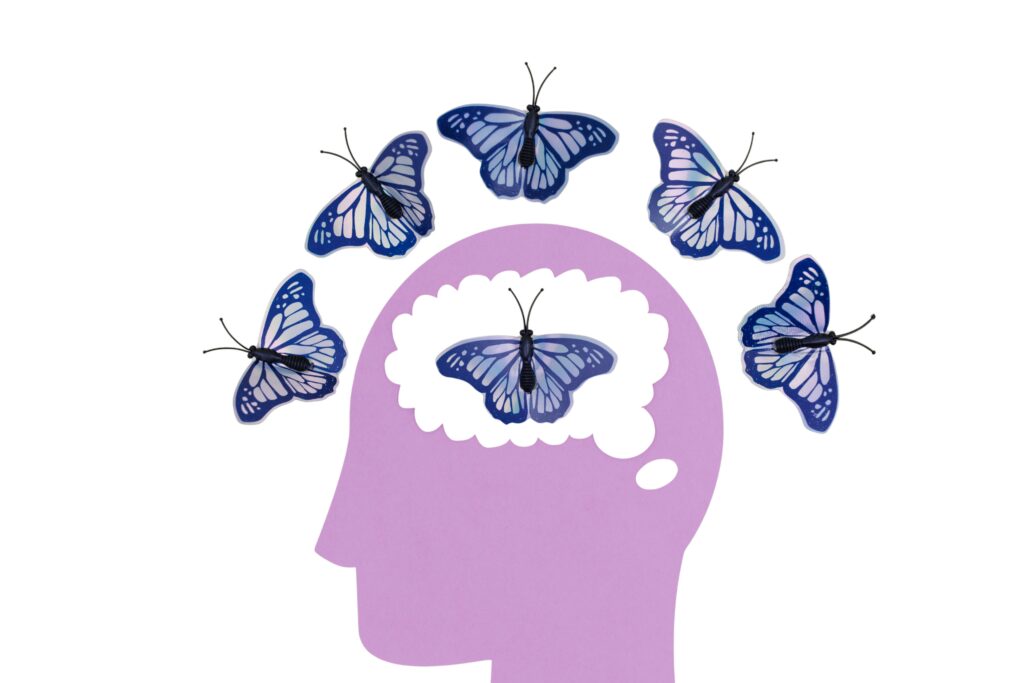
There’s nothing wrong with you – it’s your brain!
I find the human brain utterly fascinating. It’s staggering to think about the sheer number or neurons, connections and cells that weave and move throughout it. Not to mention the capacity it has to hold varying degrees of emotions, feelings, thoughts and calculations. It’s no wonder that it’s often described as the most complex structure in the Universe.
I have enjoyed learning and reading about neuroscience and neuroplasticity for some time. The Brain’s Way of Healing, by Norman Doidge was an interesting exploration about how, with focussed intention and repeatable methods, the brain could rewire itself and in many times, heal, from many, even some incurable, medical conditions. It’s just one example of a multitude of research, books and articles talking about the brains ability to change.
So why does it often feel so difficult to make change stick when we’re striving for a new goal or outcome? You’ve done the work. You’ve set intentions. The want is there. The desire for change is real. Yet you can feel like you’re stuck in the same patterns and routines and nothing shifts.
If the brain has the capacity to rewire itself and change, then why does it feel like you’re failing? Why does it feel like making change stick feels impossible?
The good news is….it isn’t you!
Quite simply, your brain is pre-wired to protect you. It thinks in outcomes. It’s always looking for ways to rearrange itself to find the outcome that provides the least amount of resistance for the quickest result.
When we perceive a threat, our brain enters the fight or flight mode. It quickly fills our bodies with adrenaline and hormones to get us moving into action. This is excellent for getting us to react quickly and either tackle the situation head-on or more to safety where the threat can’t get us. Perfect for life-threatening situations.
The difficulty in modern day life is that our brain hasn’t evolved to decipher a real threat from just everyday stress. Everything that may be different, or difficult gets lumped together and the easiest way for the brain to cope is to revert to what’s worked in the past.
Repeating a pattern and behaviour that you’ve done consistently, even if it no longer helps or serves the person you want to become, is much easier and safer to your subconscious than venturing into unknown territory.
So what does that actually mean?
From a coaching perspective, this is really great news 😊. When we approach change and transition from a place that supports how our brain naturally prefers to function, we can create next steps that are not only manageable, but attainable.
Where Norman’s book helps to explain how the brain has enormous capacity to rewire itself through small, repeatable exercises, James Clear’s Atomic Habits, builds on the same concept that small, incremental changes can help to create new and better habits.
So how does this help in coaching?
When we look at a goal from both a macro and micro perspective, it helps to make the concept much more clear. I often ask clients
“Envision yourself in the future, a future where everything is exactly as you want. There are no problems, you have exactly what you wished for…what would that look like? What would that feel like? Who is the person you are looking at?”
The goal is to think in a big, audacious way and not only see, but feel what the ultimate life would look like. This is important because it recalibrates the vision into something that can be felt within the body and we can start to link positive, physical feelings to the envisioned life.
From there, we can set out some goals, build in some accountability and ride the wave of these elevated vibrations. You’ve seen the life you envision from a macro perspective and things look good.
Often though, it doesn’t last long
But this is where things could start to fall flat. Life comes in and starts to beat at the vision. Work emergencies and family life take priority over the goals you’ve set. And soon, the feelings you embodied for the life you want start getting pushed aside and becoming less accessible.
You didn’t do anything wrong. In fact, you’re doing everything right. You’ve set an intention, have a vision, and you’ve even had a physical reaction to your goal. The problem is the vision is just too big for your brain to handle. So, it sets back to its default mode, taking care of the tasks and responsibilities its learned and knows.
It’s safer that way. Or at least that’s what your subconscious mind would have you believe.
The better news…
When you break things down into smaller, more digestible pieces, you begin to work with your brain to move the needle towards the goals and life you ultimately desire. Thinking big and having the large vision is your macro perspective. It becomes the beacon you sail towards, the consistent light that doesn’t dim or falter.
The smaller parts, the mini goals. They are the micro perspective that helps you to inch your way, little by little, helping you to have a celebrate the small wins and movement you make along the way.
And the best news is that the research supports you in the little things. By breaking down your big, audacious goal into small, repetitive tasks, you are literally rewiring your brain to accept a new state of being and to know that it’s safe to go where you want to go.
What does that look like in practice?
Say for example, you’re ultimate goal is to have more energy and feel more vibrant. You may envision yourself doing any number of things that bring you joy and take energy to do; hiking in the desert, shopping all day long and enjoying a wonderful dinner at a favourite restaurant, travelling to exotic locales and savouring the local cuisine. You may feel the sun’s rays on your face, feel the movement of your muscles, enjoy the pleasure of working your body.
You’ve got a really great idea of what having more energy and feeling more vibrant feels like in your body and you probably have a pretty great visual to match.
Okay, so what’s the next steps?
So when you look at your everyday life, fulfilling those dreams may seem a little far off. You may create a goal to work out more and eat better to help your body feel more energized. Or you may endeavour to get more sleep to encourage your body to feel more vibrant.
But if you break those goals down even further, and commit to doing small actions to get there, you’re likely to see and feel yourself moving closer to what you envision.
So, you may commit to walking ten minutes each evening after dinner. It’s a task that can be done easily, doesn’t take a huge amount of effort and feels safe. After a few weeks, you may notice you’re starting to walk for longer periods, or you’ve felt a slight increase in your energy level. And now you’re a little motivated to try going to bed a few minutes earlier each night.
Over time, these small changes start to build into noticeable results and it only involved one tweak at a time. You made small changes, repeated them, and helped your brain to ascertain that these new things weren’t threats at all.
The bottom line
When we work with our bodies, and specifically our brain, during times of transition and change, we create an environment that provides the best support for success. Set the big goals, think into the stratosphere and keep your eye focussed on the big prize. But realize that is the destination to strive for and that it takes time to get there. When you break down your goals into mini or micro steps you are signalling to your brain that this change really isn’t that scary. It’s manageable and doesn’t alter the status quo too much. And your brain likes that, and you will too.
If you’ve been struggling to make your goals stick, working with a thought partner and coach could be just the answer. Let’s connect to explore how to move you towards the life you’re yearning for.

+ view comments . . .